
“They’re elusive. They’re beautiful. They’re absolute bastards!”
Sure, these wayward brown trout are technically card-carrying members of the Salmo trutta family. But at 42 degrees south, they behave exactly like their northern hemisphere steelhead cousins. They’re elusive. They’re beautiful. They’re absolute bastards.
I’ve got a long-standing love/hate relationship with these silver gangsters. They masquerade as freshwater trout, but their annual saltwater sojourn turns them into something else entirely. Something harder, wilder. A fish that defies logic. A fish that doesn’t make sense. A fish that’s damn hard to find… and therefore completely irresistible to chase.
Every year, these chromed impostors bugger off to the Southern Ocean for reasons known only to them. Maybe some trout just hear the call of the sea like their salmonid cousins. Whatever happens out there, the salt water seems to run straight to their ego and rewrite their DNA, returning as salty dogs — tougher, meaner and thoroughly hardened by their pilgrimage.
From stream trout to ocean-going athletes.
They’ll spend months at sea, hundreds of kilometres from home, smashing baitfish and whatever other briny snacks cross their path. There’s nothing out there that resembles a juicy grasshopper or a dainty size-16 dry fly. Just protein and violence. Perfect, really, for an alien out of its depth — pun intended.
I’ve spent 20-odd years chasing sea-runners along the banks of the River Derwent here in Hobart and, shamefully, my success rate is embarrassingly low. Every year, I put in an enormous number of casts for what would likely yield far greater results in the highland lakes or lowland rivers. But that’s exactly why they’re so addictive.
I recall saying to my son Felix, ‘I’d love to do an article on sea-runners.’ He just stared blankly at me, eyebrow raised, wearing a look of confusion: ‘Dad, seriously?’ Of course, the moment a DSLR is pulled from the bag, every fish within a kilometre radius develops a sixth sense and vanishes. With sea-runners, the curse is worse. And there are only small windows each year when they’re even worth targeting.
So, a loose plan was hatched: fish the upper, middle and lower Derwent over a couple of months and hope — pray, really — that we could find a couple of fish for the sake of the story. Because chasing sea-runners isn’t just about the fishing, it’s optimism management.
AUSTIN’S FERRY
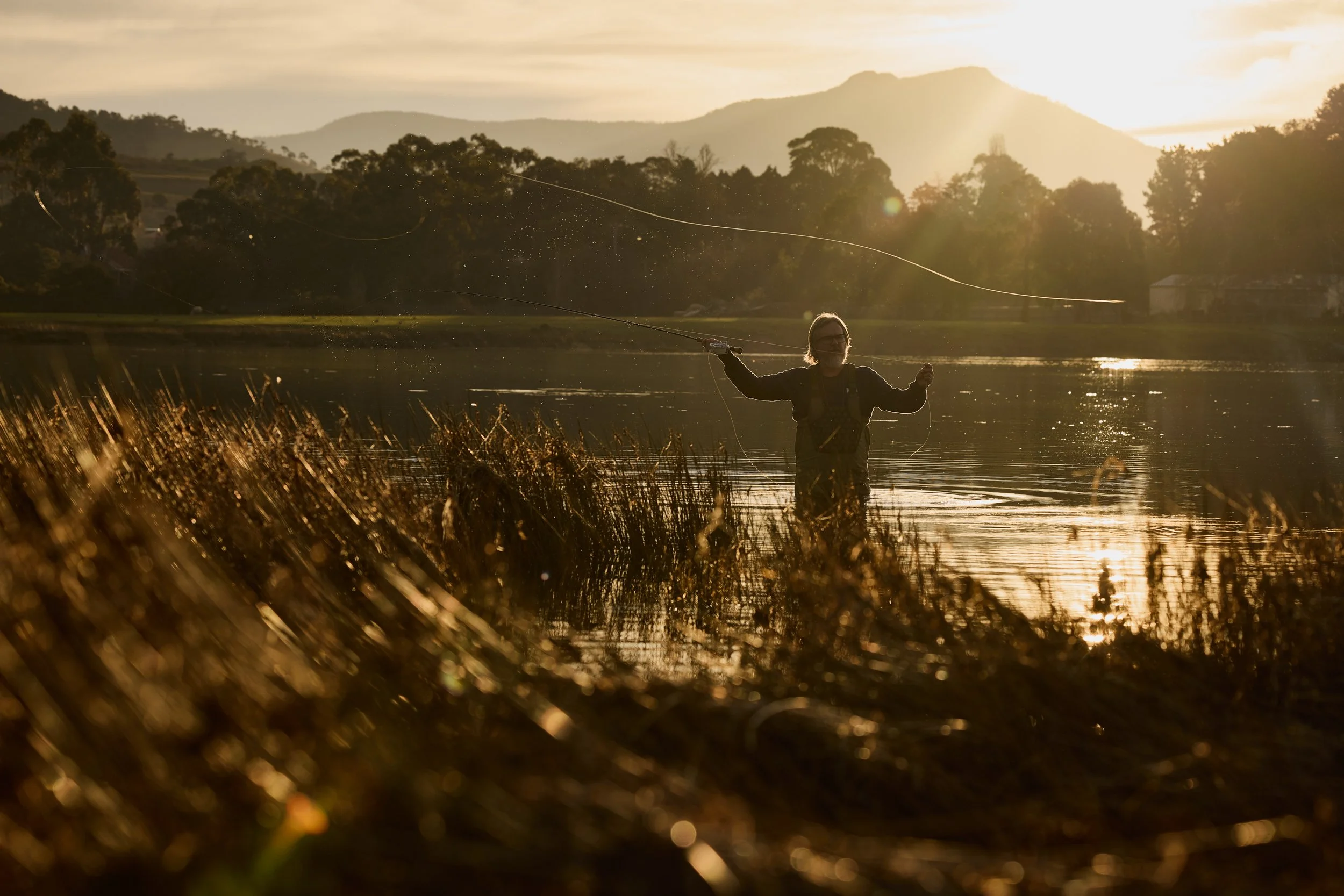
Take One. After plenty of favourable reports from fellow anglers, the first port of call was Austins Ferry. There’s an access point near Goulds Lagoon, and within a few metres of leaving the road, you’re standing in a beautiful reed-lined bay — the perfect edge for prowling trout to herd baitfish.
“Standing in a beautiful reed-lined bay - the perfect edge for prowling trout
to herd baitfish.”
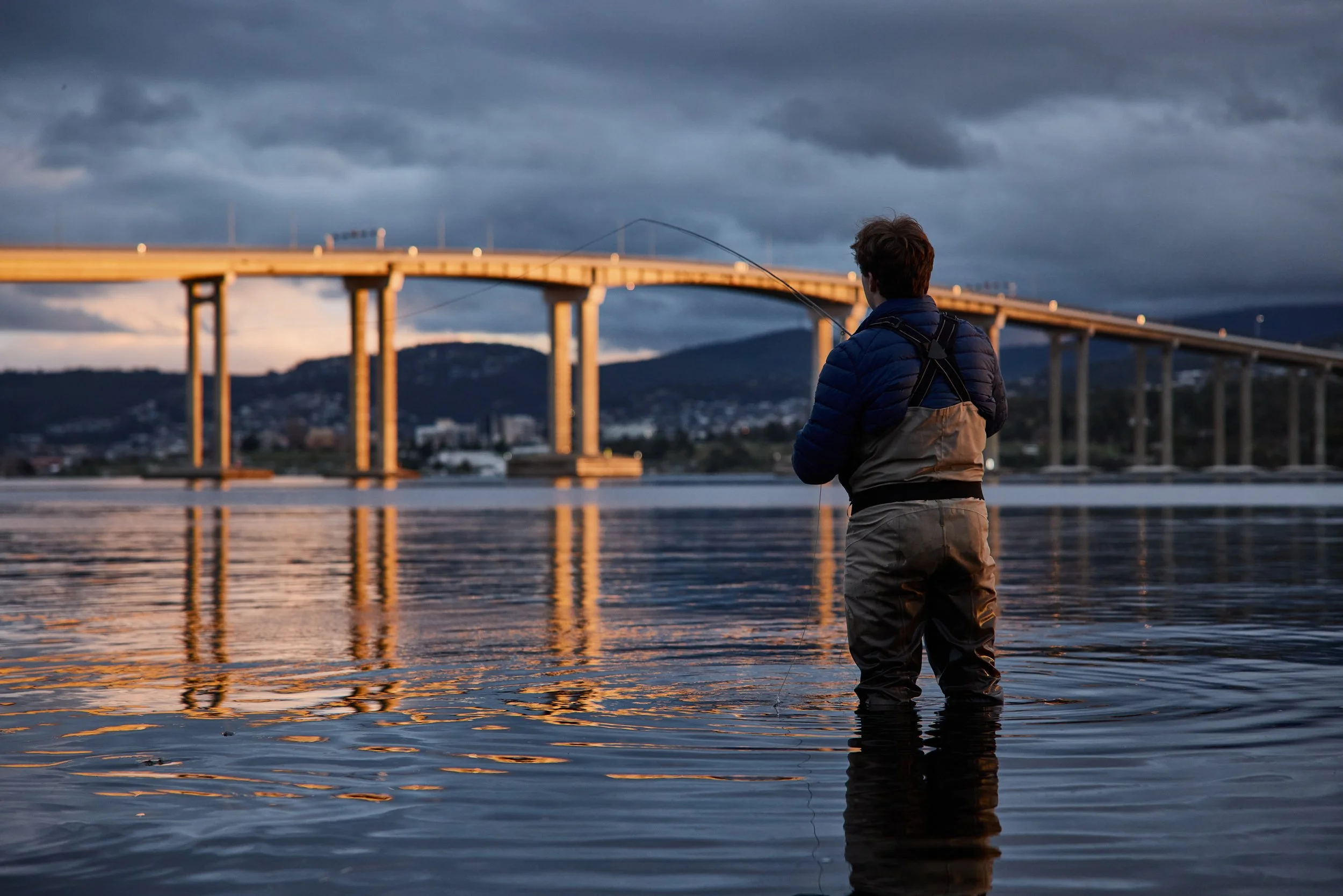
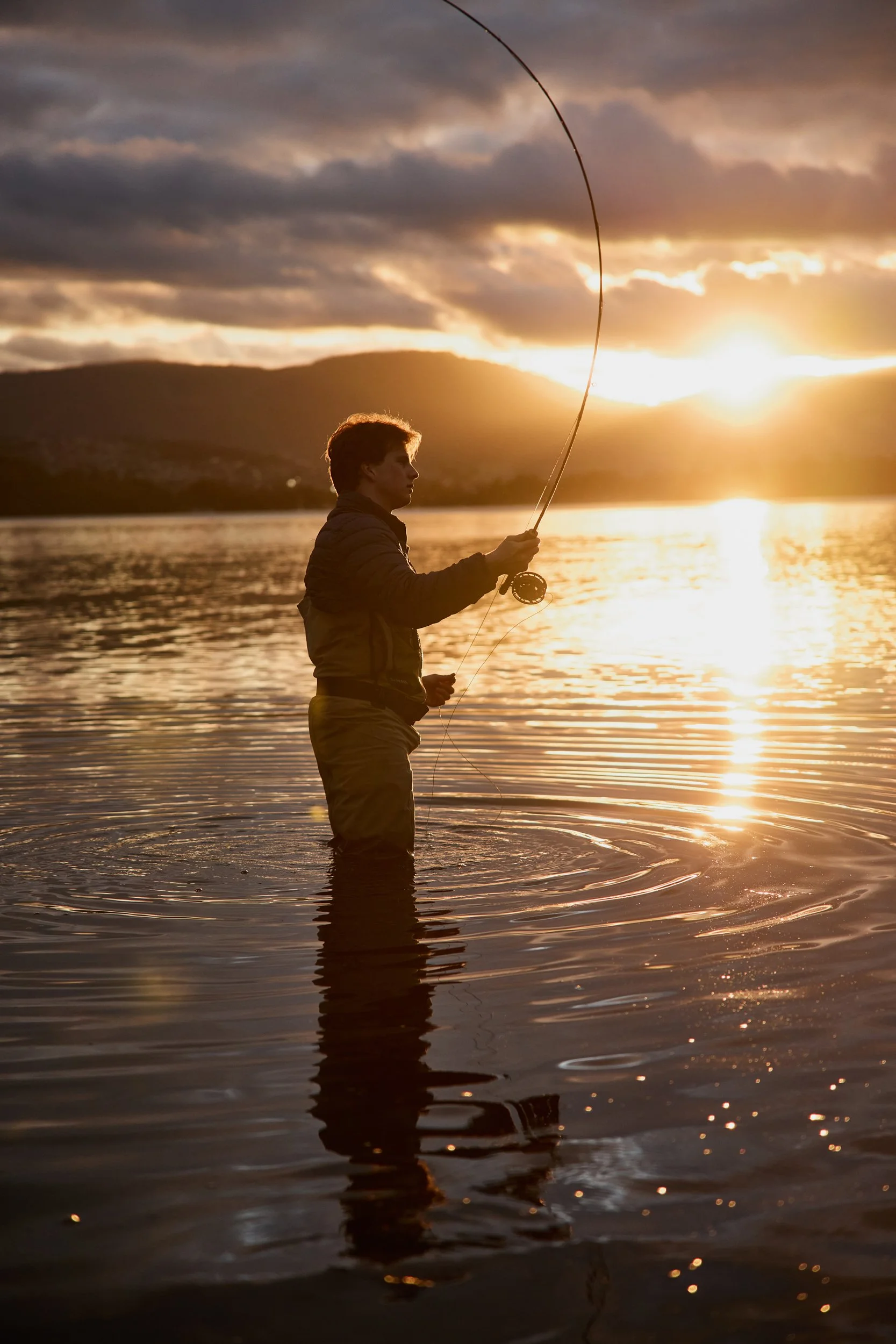
It’s early July, and at this time of year, evening fishing can be magic. There’s a bite in the air, a warning of the colder nights to come, yet the sun still throws a warm glow across the water, keeping my shadow pinned to the shoreline. I may be biased, sure, but Tassie light produces some of the most magnificent sunsets in the world. The golden hour here is perfect for fishing and photography alike.
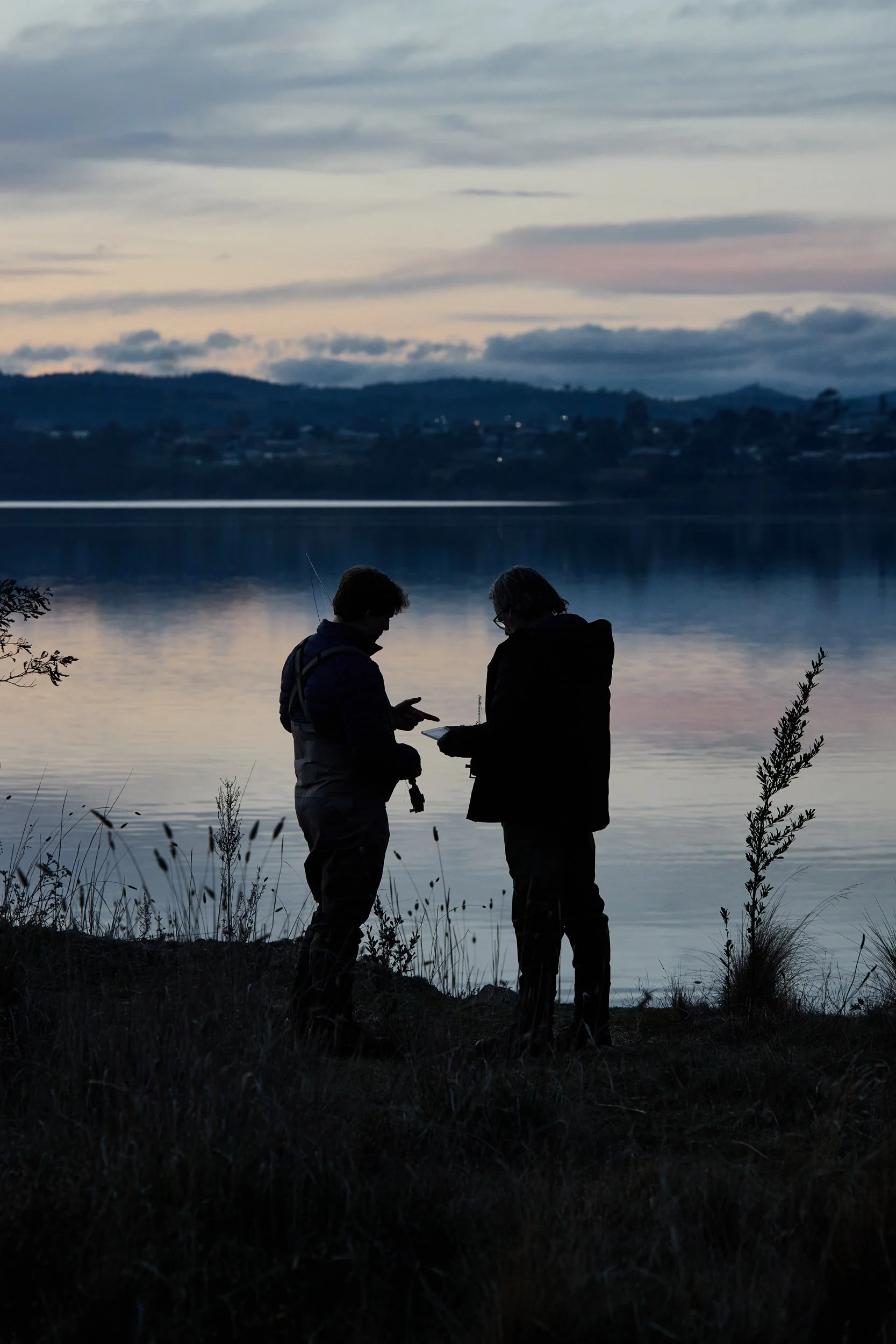
Felix reminding me to clean up my fly box.
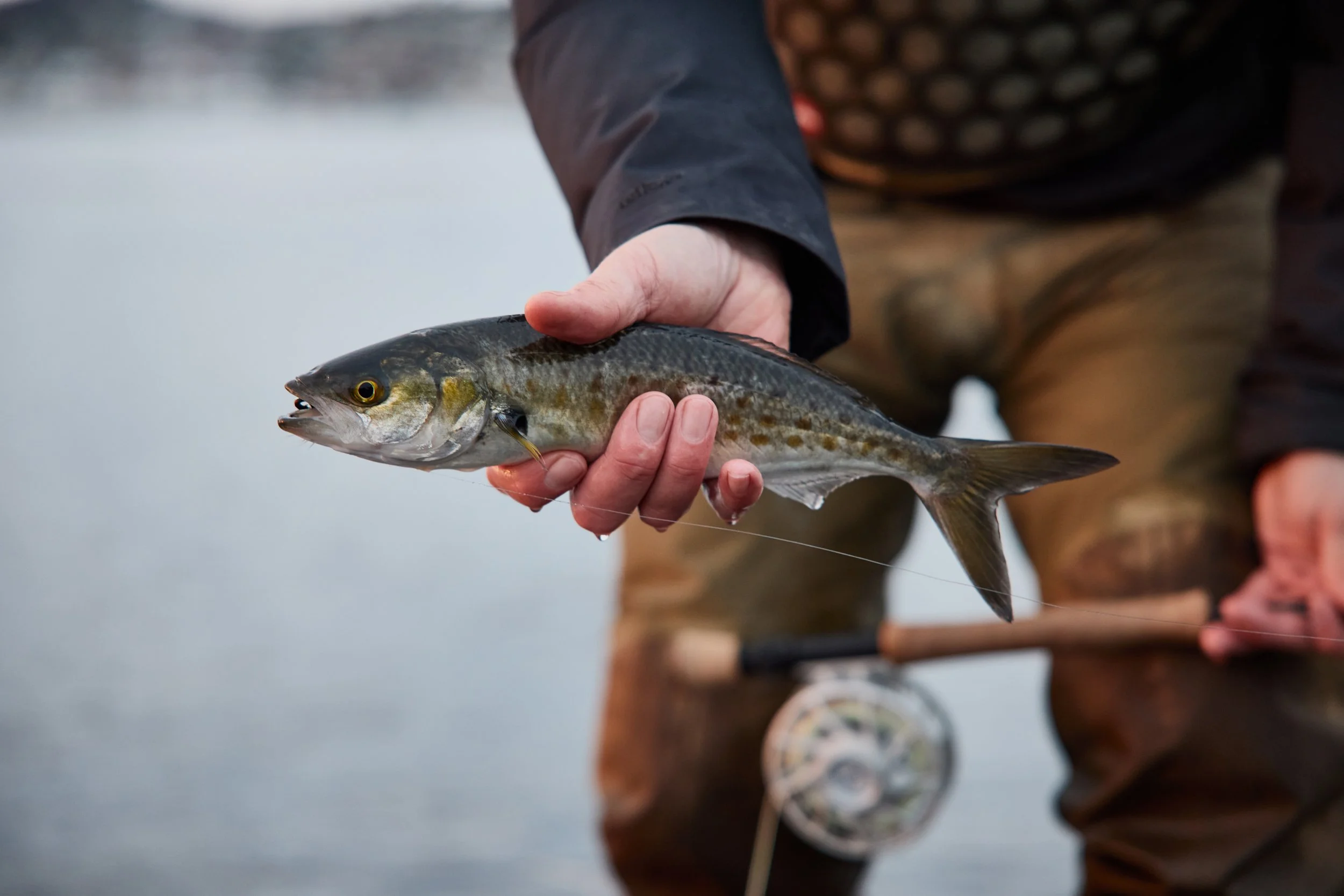
Within seconds, Felix is into a fish. I start ranting about it being a sea-runner and how lucky we are. The fish puts up a decent fight on his 6-weight, charging off in short, stubborn runs… only to reveal itself as an Australian salmon. ‘Cocky salmon’, as they are traditionally known, are bloody good fun on a fly rod. Even a medium-sized specimen will put up a respectable fight!
It was one of those beautiful winter nights. The water level was perfect, and the river looked fishy. I was full of confidence, convinced this was the night. As I said… optimism management. The size 12 Humungous I was throwing kept snagging stray weeds, each bump teasing me with false hope, until finally a solid tap thumped through the rod. Righto… here we go
But this is what they do. Maybe you see a swirl. Maybe you get a decent tap if you’re lucky… and then that’s it. The action just vanishes, like someone flicked a switch. My early excitement faded with the light. Two hours slipped by without another touch. The cold started creeping through the Gore-Tex, and a cold beer began calling my name. Alas, my instincts were wrong. We retreated home fishless.
ROSE BAY
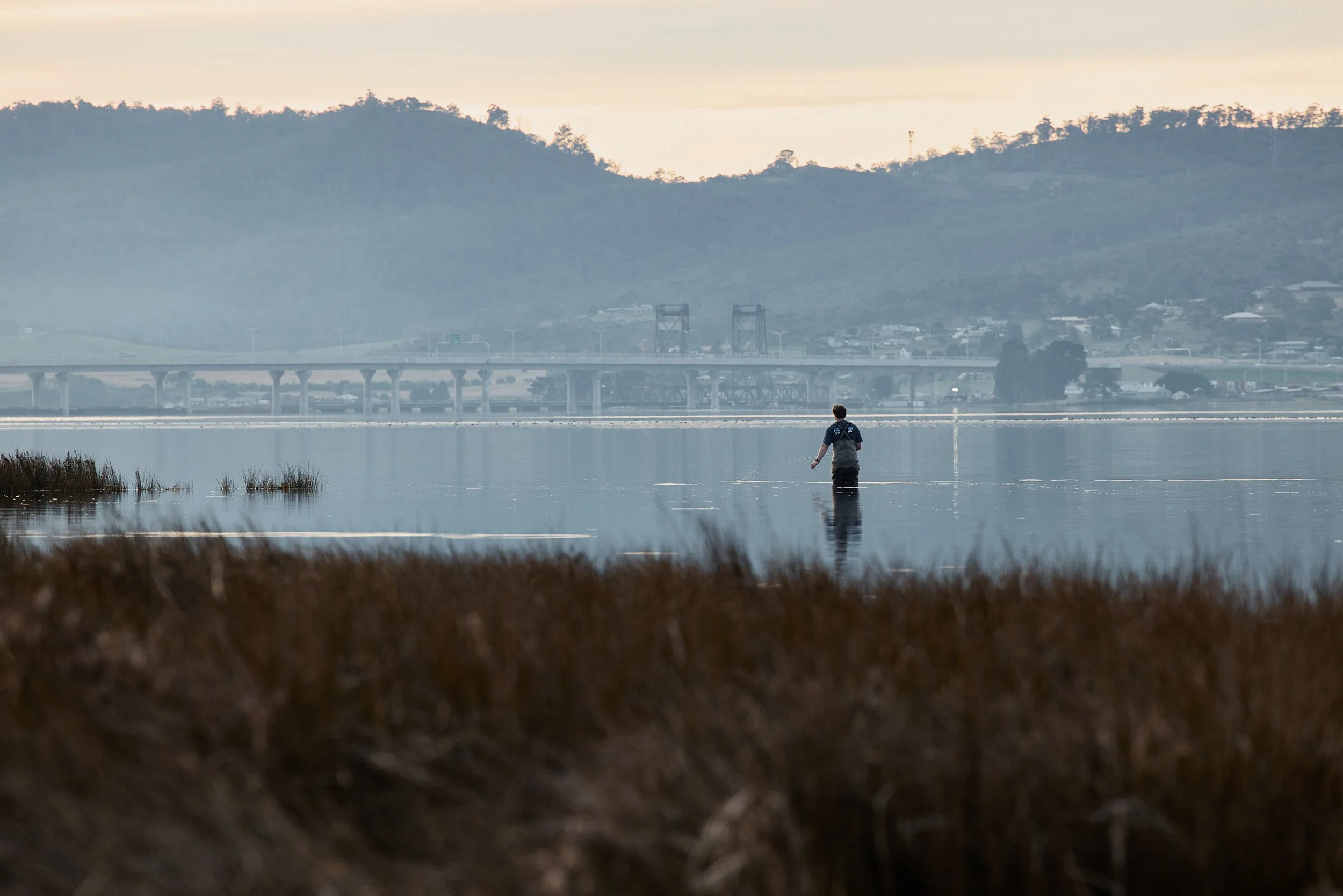
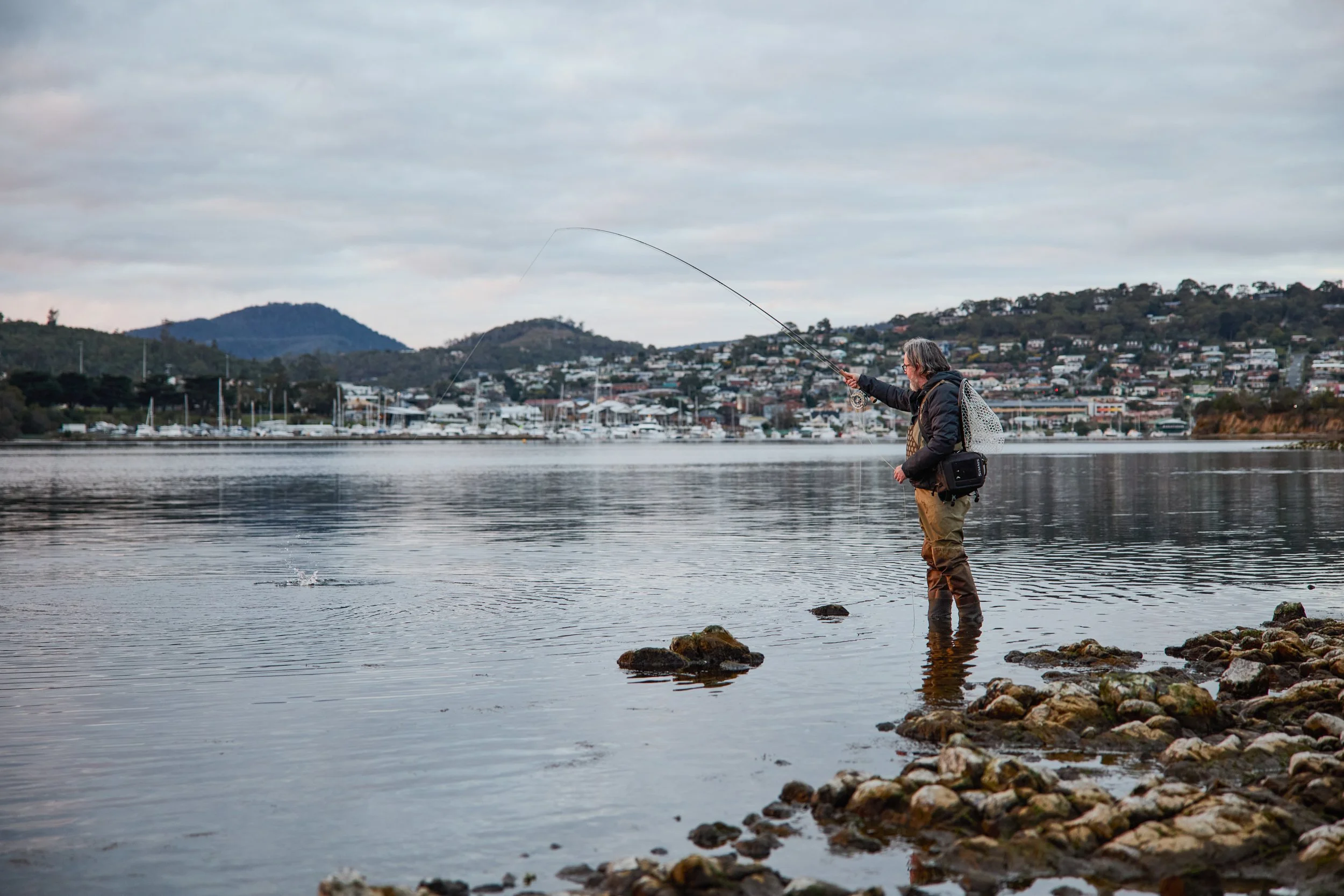
Take Two. A few weeks later, Rose Bay was the destination of choice. When the tide is right, the shoreline offers wonderful wading all the way from Lindisfarne to the Tasman Bridge. To say Hobart is a pretty city is an understatement. I struggle to think of another capital where inner-city fishing comes with a postcard view this good.
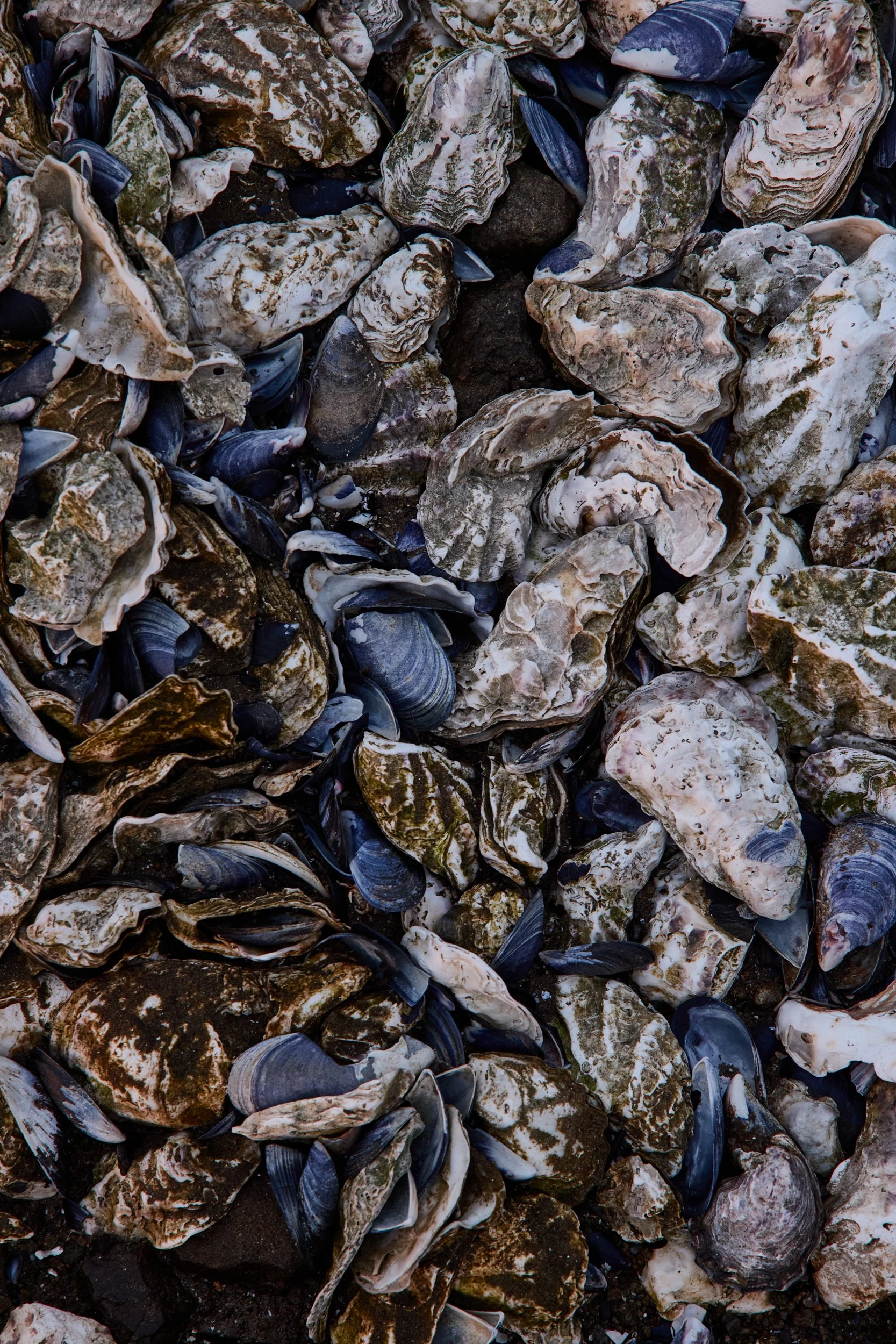
There’s a carpet of oyster shells, eager to steal your flies.
The shore here is shallow, stitched together with patches of oyster-
shelled beach and the occasional drowned tree, drifted downstream and buried in the sand — perfect structure for baitfish to writhe around and prime cover for trout to ambush them.
A walking track hugs the water, and friendly chats with curious passers-by are part of the deal. There’s not a person alive who can resist asking, ‘Catching any, mate?’
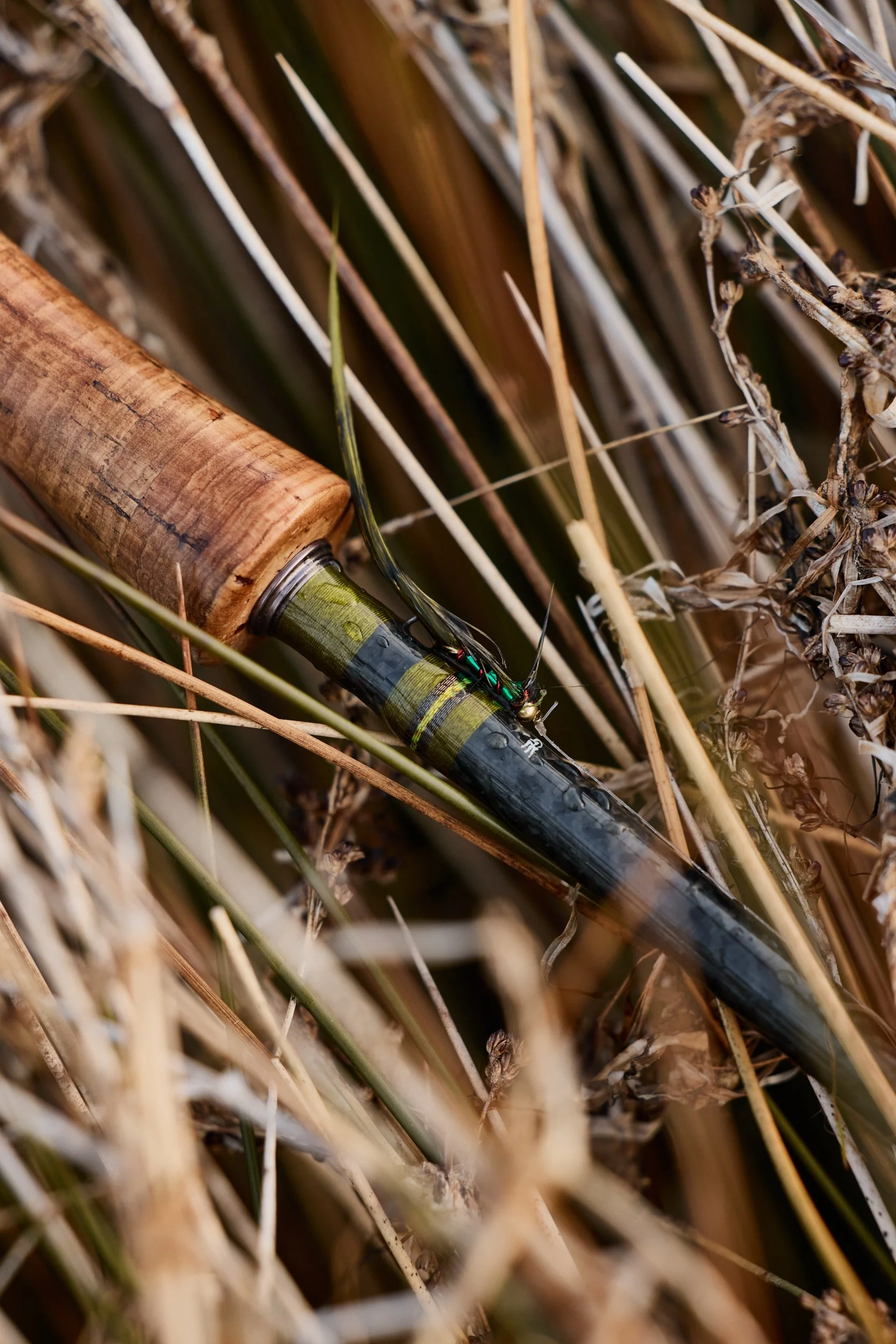
We prospected the shoreline, casting Woolly Buggers, Magoos and Humungous flies — patterns just as deadly in salt as they are in the fresh. Sure, I’ve got plenty of beautiful saltwater flies tied by local legend Simon Ellis… but losing one of his masterpieces to jagged oyster shells leaves me grumpy.
I’ll cut to the chase. Another glorious winter evening spent flogging the water — the wind was perfect, the tide just beginning to fall, the sunset beyond beautiful. And still, no bloody sea-runners. Our only reward was another greedy little Aussie salmon, eager to prove his worth. Back to the drawing board.
LIME KILNS
Take Three. September crept up fast and, with winter fading, a welcome hint of spring filled the air. But the window for sea-runners was closing. Soon they’d push back into fresh water, and by October the action would all but dry up. Time for a new plan.
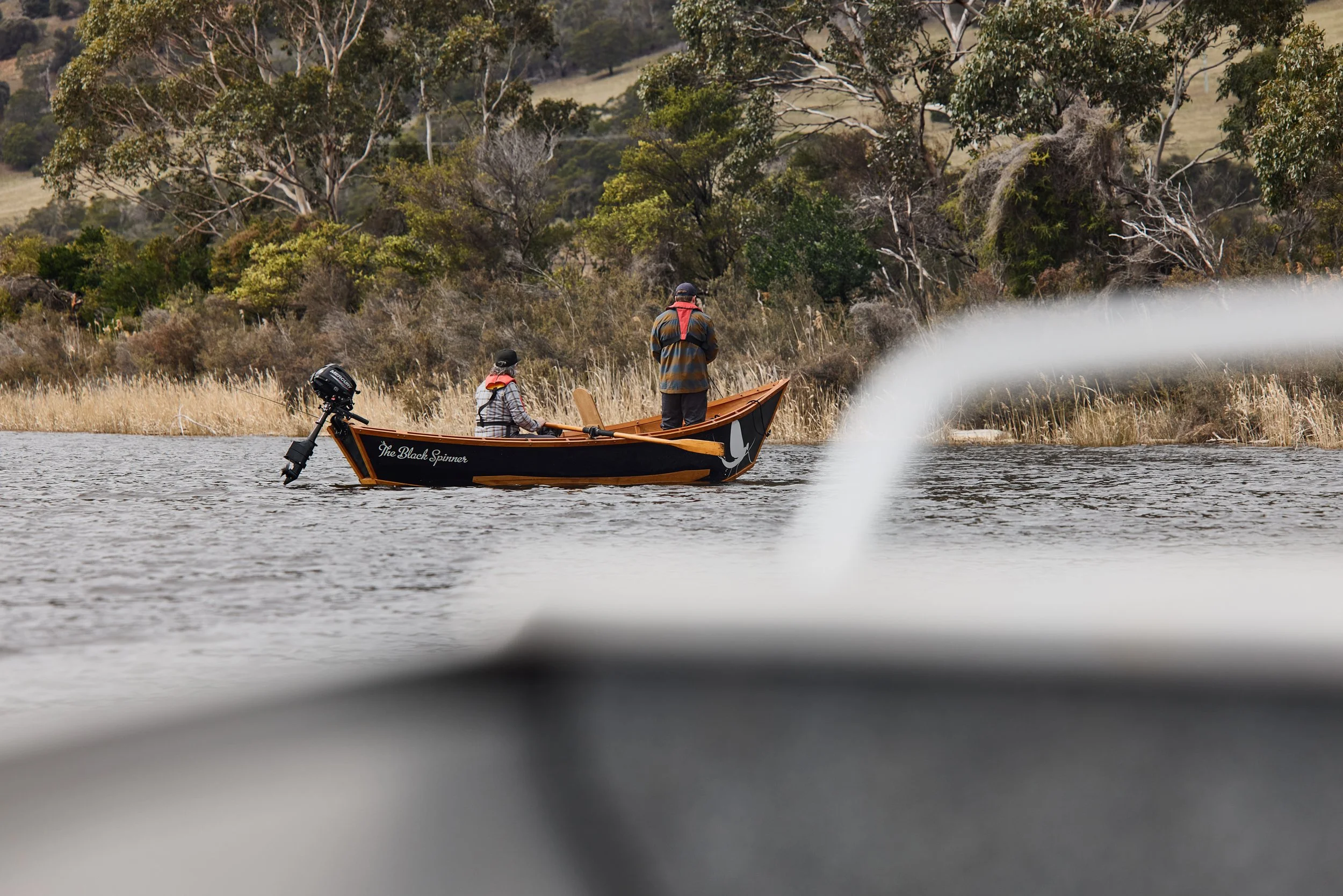
We called upon Alex Green from Spot On — The Fishing Connection in Hobart. Greenie’s a mad-keen fly angler and suggested we launch the drift boat at a roadside put-in north of New Norfolk, then work the edges downstream to Murphy’s Flat Conservation Area. He’d fished here plenty of times and reckoned the fish would still be moving through on their upstream run.
Side note: solid black bream can be found along this stretch too — the kind that’ll put a serious bend in a fly rod — but we had to stay disciplined and stick to the plan.
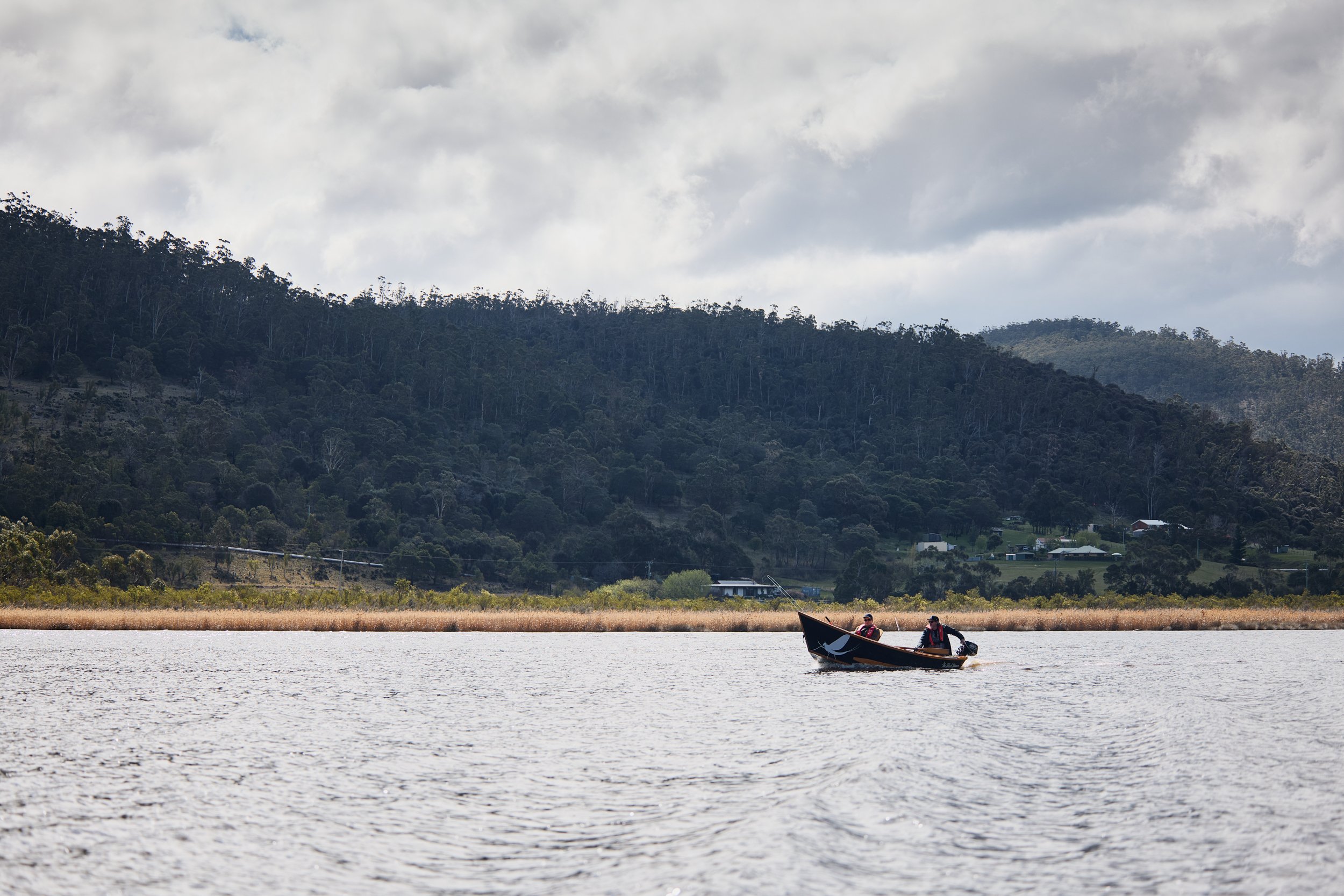
The river runs wide through here, the current carrying a steady pull. A drogue wasn’t necessary, but any stronger and we’d have to drop it in to slow the drift. The breadth of water made my drift boat feel like a Mini on one of those eight-lane American freeways. Thankfully, there were no jet boats tearing up the serenity. Grassy weed beds fringed the edges with the average depth around a metre by the shore — perfect drifting water in my book.
“The river runs wide through here, the current carrying a steady pull. ”
I played guide for Greenie, happy on the oars this time as we slipped into the current and tracked toward the southern shore. Meanwhile, Sam, our photographer, shot across the river in his tinnie, fly rod in one hand and camera in the other, determined to land the first fish. A gulp of cormorants (yes, that’s their collective noun) eyed us off suspiciously as they huddled on a jagged, drowned log.
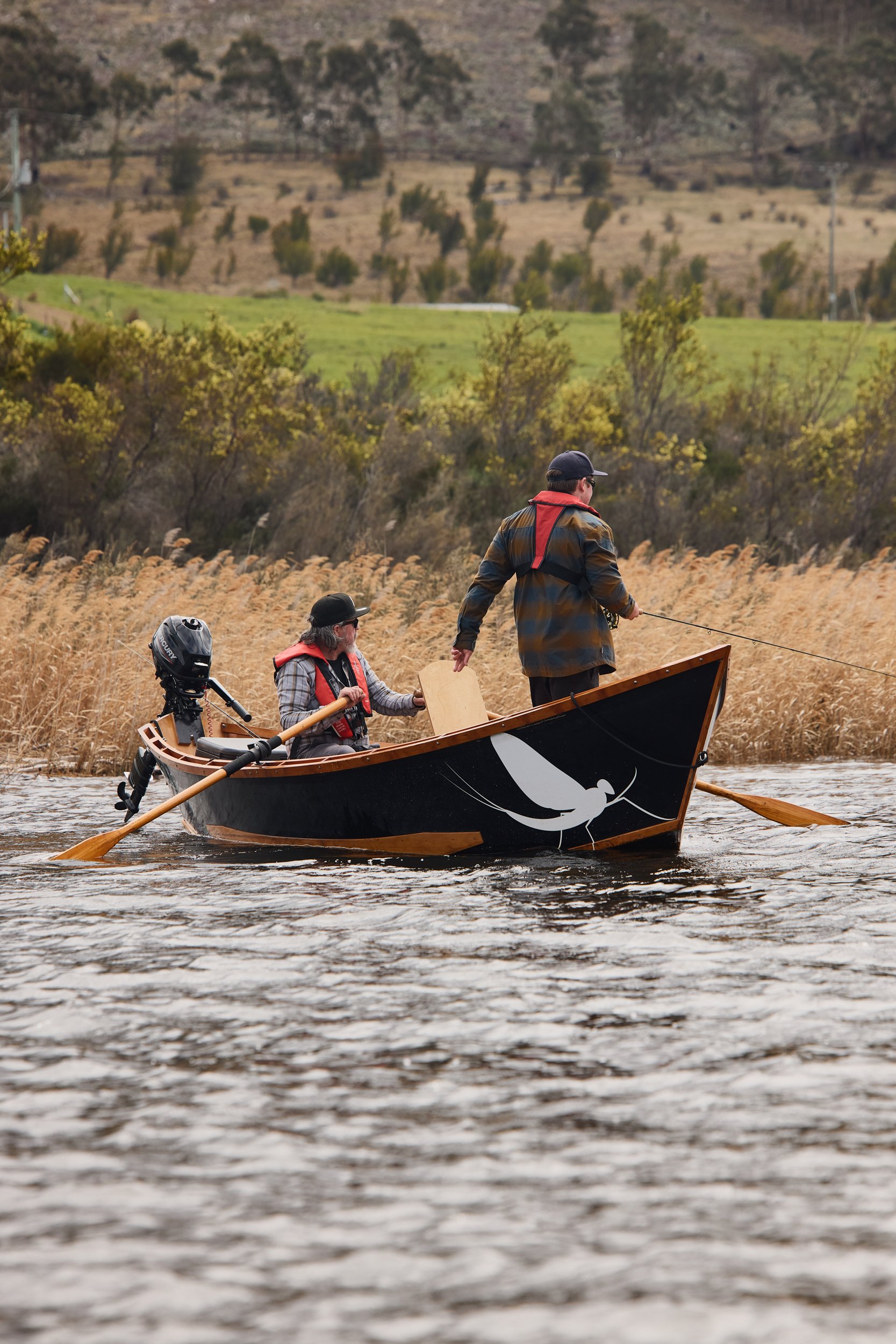
Drifting close to the bank produced results.
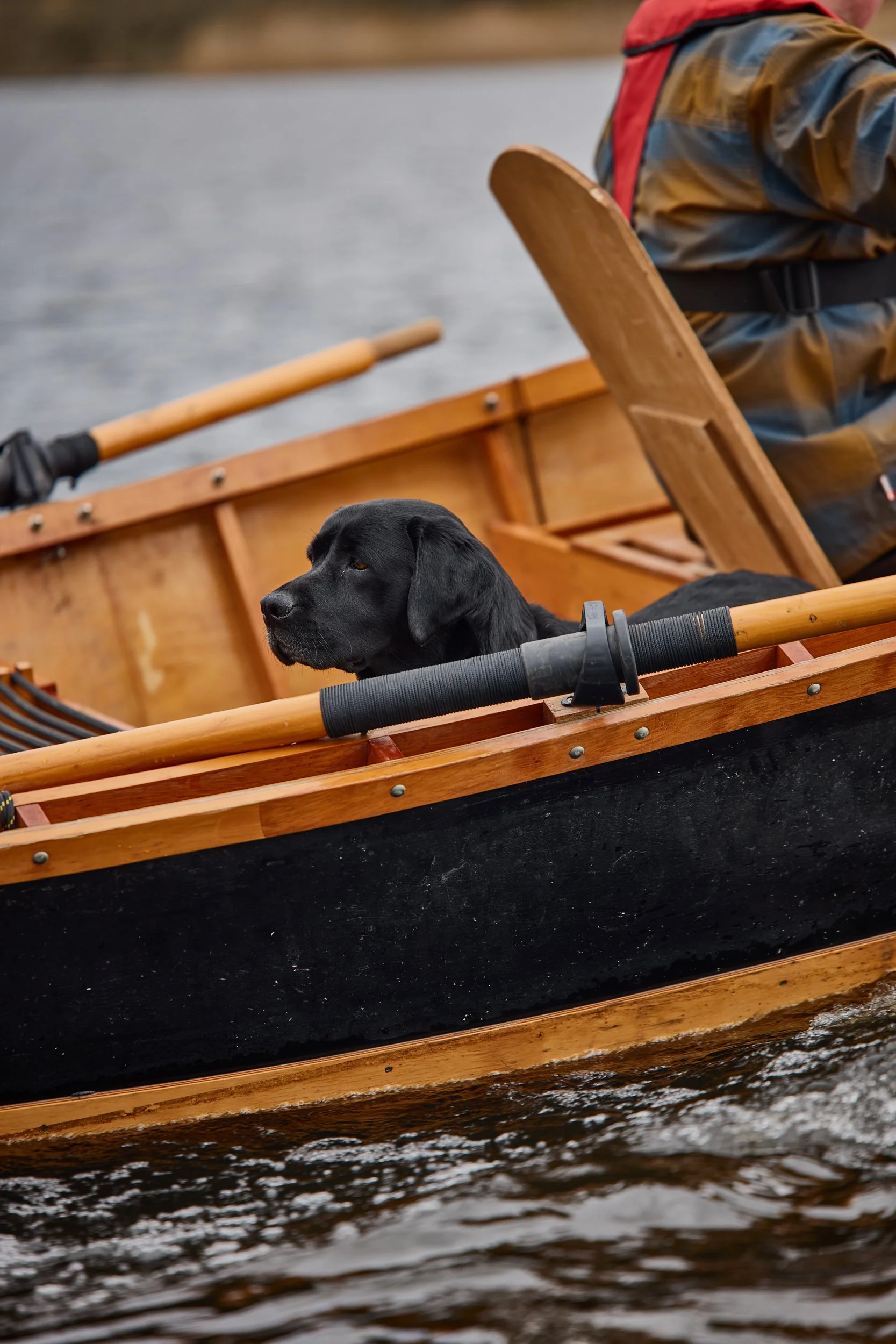
Bugger me if we didn’t hear him yelling within minutes. We crawled across the bend at a snail’s pace as I rowed frantically against the current to inspect his catch, my dog Rosie frothing with excitement as Sam hoisted his prize into the air. ‘Hurry up,’ he laughed, ‘we need a photo!’
Greenie suggested we stick to the northern shore now — maybe that’s where the fish were holding. Sam shot across the river again, just above our last position, to quite literally test the water on the opposite bank.
We drifted along, chatting, while Greenie methodically prospected the edge with his 10-foot 6-weight, casting a team of flies tight to the weed beds without snagging. He’d let them sink for a couple of seconds, then strip them back at a steady, deliberate pace — patient, precise, covering every inch like a bloke who knew the fish had to be there somewhere.
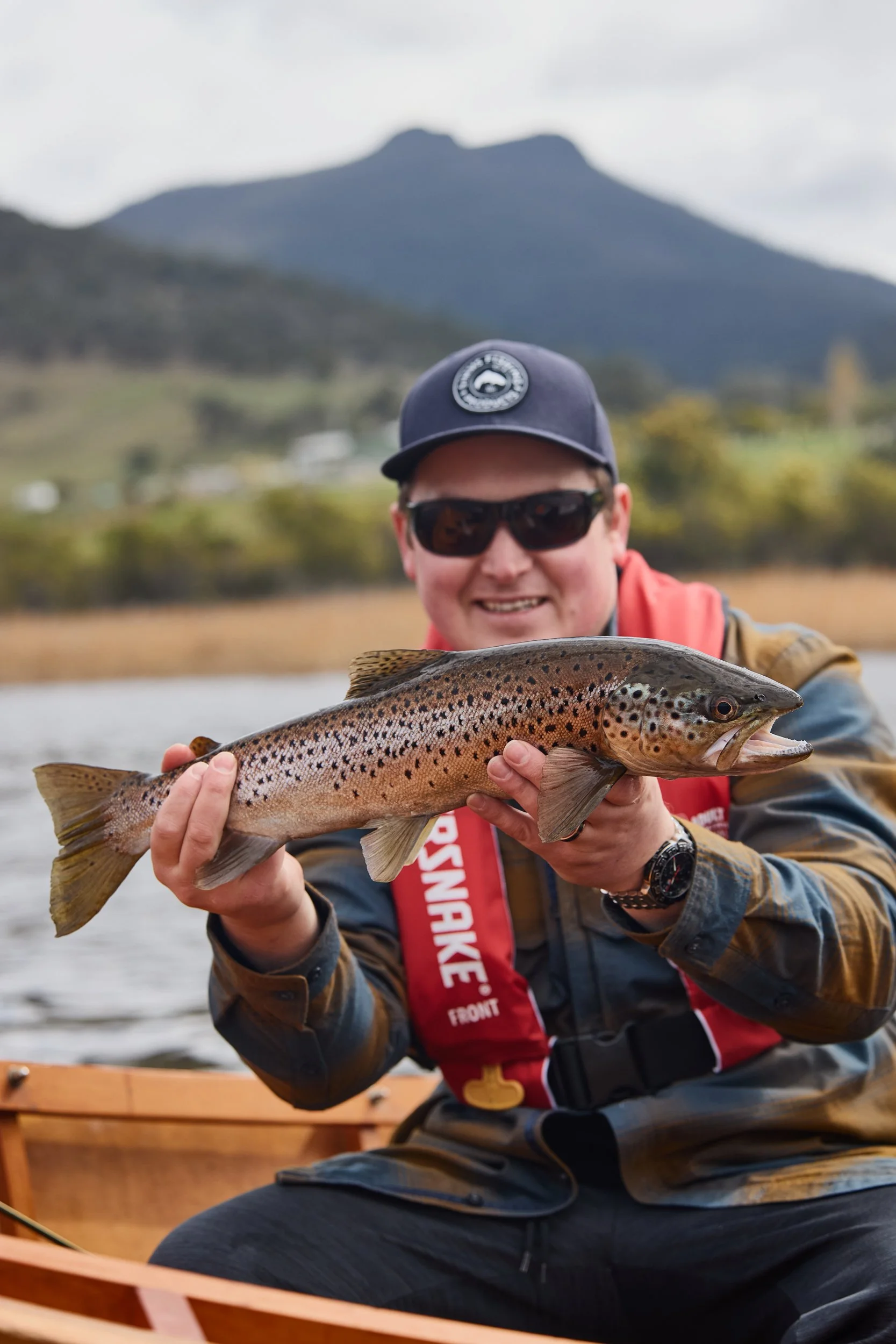
An eruption of excitement shattered the silence behind us, and we turned to see yet another solid bend in Sam’s rod. The outboard roared to life, and the tinnie shot toward us, Sam holding up another chrome-bright sea-runner. Lucky bastard!
For the next half an hour, the dance continued, Sam criss-crossing the river above us, methodically fleecing the damned trout while we watched on, equal parts impressed and quietly tortured. With every fish, Greenie’s determination cranked up a notch. The pressure was on, he had to be back at the shop soon, and we had yet to put one in the net.
With the clock ticking down, we drifted into the last fishable run opposite the Lime Kilns. A solid fish smashed Greenie’s fly on the hang. Both of us screamed with excitement, but alas, no hookup.
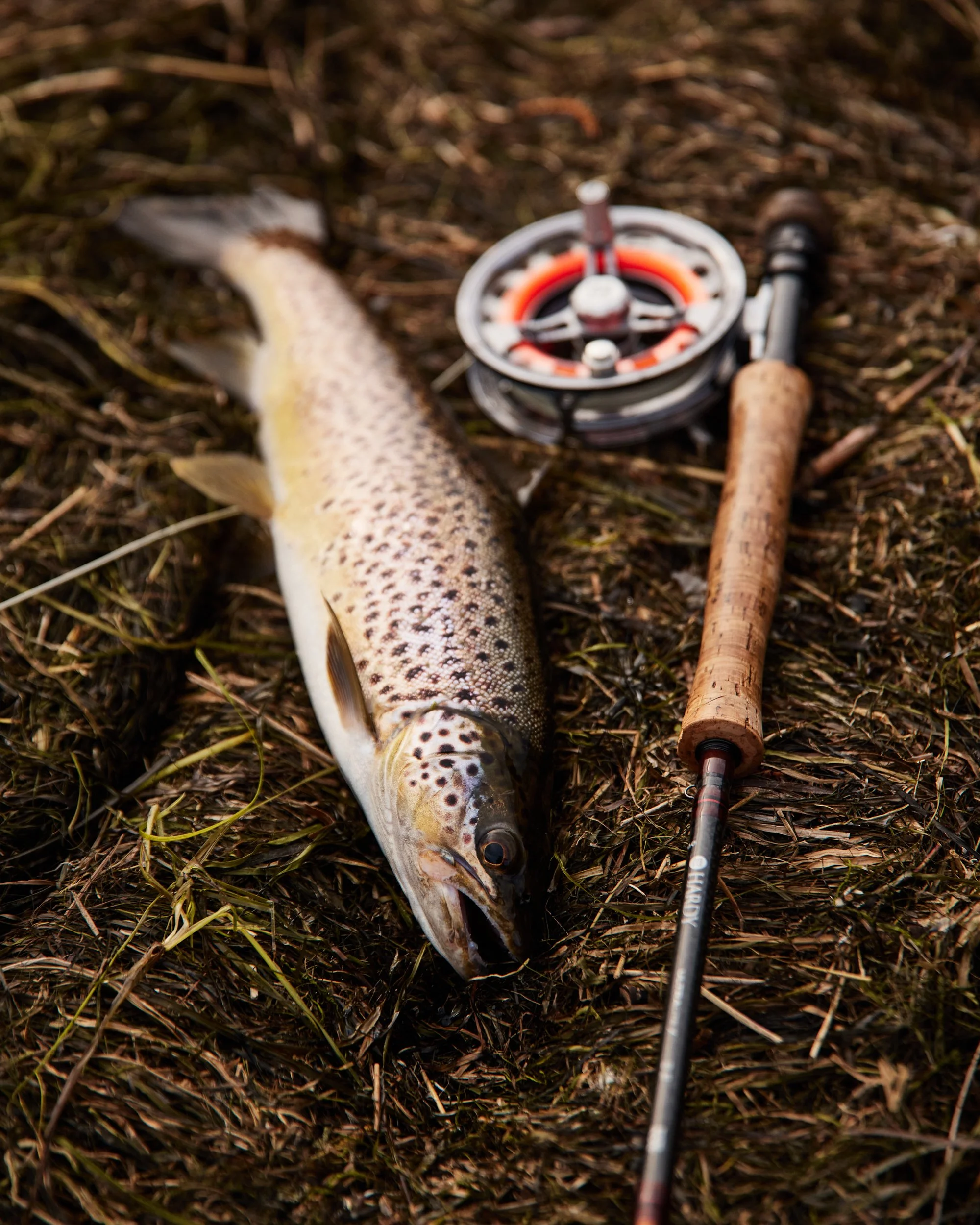
Now our hard deadline was upon us, and the weedy edge was about to give way to broad, deep water. We cursed our luck, though secretly relieved the fish were still around. Then, a feisty trout smashed the fly right on the end of the run. Talk about leaving it to the last minute. We welcomed a cracking chrome, pushing four pounds, to the net.
The session finished with six sea-runners between two boats, and I’m happy to report that Greenie made it back to work in time for the Friday afternoon rush. A huge sense of relief washed over me as I powered up the engine to usher us back to the boat ramp. We had finally found some fish.
“They still drive me crazy. And somehow, I already cannot wait to chase them again next year.”
THE OUTTAKE
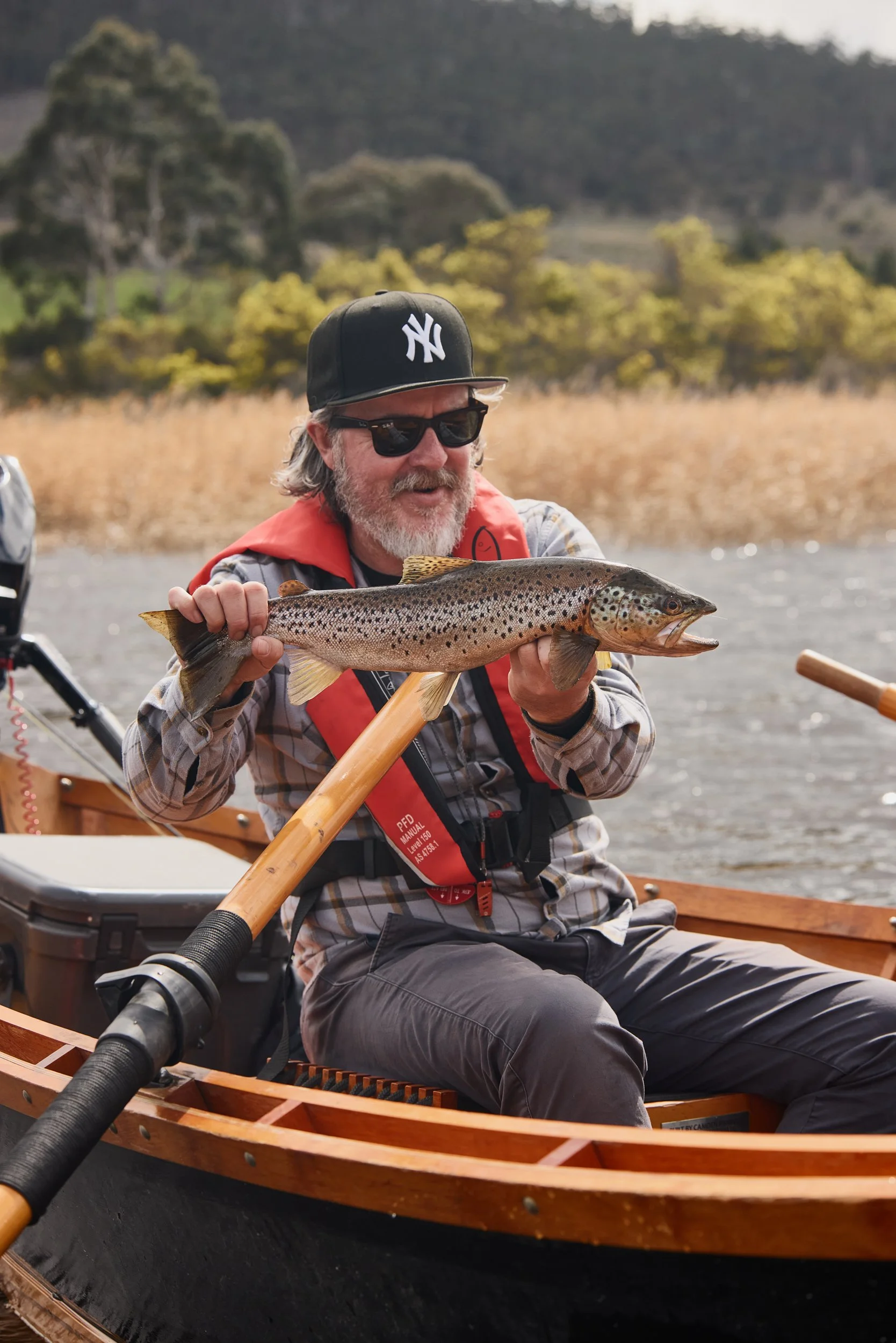
We finally struck ‘chrome’ downstream of New Norfolk.
So, what did I learn after all this running around searching for sea-runners? The critical factor is always timing, and a healthy dose of optimism. They’re either there or they’re not. The tide needs to be right, ideally high or beginning to fall. The wind, gentle. Late afternoon to early evening is generally best, preferably under overcast skies.
There are fantastic shore-based spots scattered along the Derwent from the Tasman to Bowen to Bridgewater bridges, but ironically, our best sport came further upstream in the estuary on a reasonably bright day — go figure! Perhaps it was timing, perhaps luck, but stubborn persistence eventually paid off. I still love them. They still drive me crazy. And somehow, I already cannot wait to chase them again next year.
As published in FlyLife magazine #123, Winter 2026.
Tight lines! 🎣
Marcus